When Donald Trump was sworn in as president in 2017, over 4 million protesters filled streets across the United States in a historic show of opposition to his administration, fueled by concerns over women’s rights and civil rights.
As Trump prepares to take the oath of office for his second term on Monday, the political landscape looks markedly different, with no comparable mass demonstrations planned.
The People’s March, a continuation of the 2017 Women’s March, is expected to draw thousands to Washington, D.C., on Saturday.
However, organizers acknowledge that turnout will not rival the historic protests of eight years ago.
This reflects a shift in strategy among Democrats and activists, as well as fatigue within the left-leaning electorate after Trump’s victory in the 2024 election.
Instead of large-scale protests, Democrats are focusing on a more measured response to Trump’s second term, aiming to address policy issues that directly impact working-class Americans.
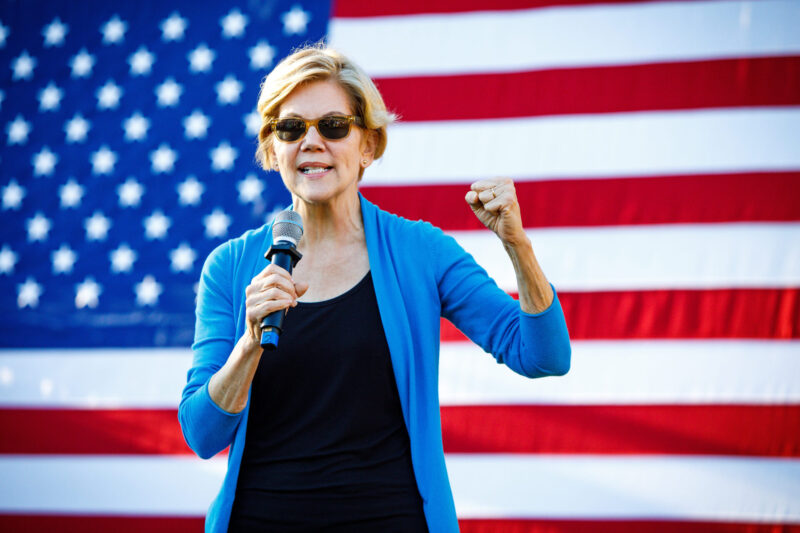
“People in 2017 were deeply uncertain about what a Trump presidency would mean and wanted to raise their voices to try to influence them,” Senator Elizabeth Warren (D-Mass.) explained.
“This time, Trump and his tight band of billionaires have made pretty clear what the fights will be.”
Among the key concerns for Democrats are Trump’s proposals to cut social safety net programs, impose broad tariffs, and grant tax cuts favoring the wealthy.
These policies, they argue, could harm ordinary Americans’ financial stability.
Activists are shifting their focus to tangible issues rather than reacting to Trump’s often provocative rhetoric or proposals, such as his idea to acquire Greenland.
Senator Tina Smith (D-Minn.) emphasized the importance of avoiding the “outrage machine” that Trump is known to fuel.
“I think that outrage machine is something that he drives, hoping that we’re all going to get on it, and we’re just not going to get on that machine anymore,” Smith said.
Instead, Democrats plan to engage when policies are introduced that directly harm the public.
Trump is reportedly planning to issue as many as 100 executive orders on his first day in office, focusing heavily on immigration policies, including mass deportations.
He is also expected to pardon hundreds of individuals convicted in connection with the January 6, 2021, Capitol riot, including some who assaulted police officers.
Smith acknowledged the public’s fatigue with the Trump news cycle but predicted renewed engagement once his administration begins implementing its agenda.
“When they start to do the things that we’re fearful that they’re going to do, you’re going to see us fighting,” she said.
In a sign of cooperation on select issues, the Senate advanced an immigration bill on Friday that targets noncitizens with criminal convictions.
MORE NEWS: Republican Senator Breaks with Trump Over Jan. 6 Pardons, Predicts Possible Violence [WATCH]
The bill, supported by ten Senate Democrats, is expected to become Trump’s first legislative victory.
However, Democrats made it clear they do not plan to align with Trump on all issues.
Senator Ed Markey (D-Mass.) highlighted the importance of public engagement during confirmation hearings for Trump’s Cabinet nominees.
“The hearings are the education that the American people get, which will then lead to the activation,” he said.
Markey expressed confidence that public opposition would grow as Trump’s policies and appointees’ positions become clearer.
One of Trump’s controversial nominees, health secretary Robert F. Kennedy Jr., has already faced criticism from Democratic-affiliated groups over policies that could raise food costs.
Ads targeting Kennedy are part of a broader effort to draw attention to the potential consequences of Trump’s leadership team.
Democrats are banking on public resistance to Republican policies once their effects become apparent.
“The more it becomes clear how it impacts ordinary people, the more activation you’re going to see,” Markey said.
While large-scale protests may not define the resistance to Trump’s second term, Democrats and activists are preparing for a sustained fight over policies they argue could harm the country’s most vulnerable populations.
Join the Discussion
COMMENTS POLICY: We have no tolerance for messages of violence, racism, vulgarity, obscenity or other such discourteous behavior. Thank you for contributing to a respectful and useful online dialogue.